The Bureau of Standards, Metrology and Inspection (BSMI) under the Ministry of Economic Affairs, Taiwan region, has formally revised the inspection regulations for secondary lithium-ion power products. The new regulations will be fully implemented on July 1, 2027, and the old standards will be abolished at the same time. The unified import supervision code for all applicable products is C02. Triggered by frequent safety incidents such as spontaneous combustion and explosions of portable power banks, this revision mainly adds new safety test items and updates certification standards, as well as tightens control over certificates and product markings. Enterprises that fail to complete rectification on schedule will have their certificates revoked in accordance with the law, making it impossible for their products to enter the Taiwan market normally.
I. Clarified Regulated Scope: Quick Self-Check by Product Category
The new regulations mainly supervise three types of lithium portable power supplies, while specifying exempt categories for enterprises to conduct cross-checks in priority:
1、Secondary lithium-ion portable power banks: Conventional power banks, large-capacity outdoor portable power sources, etc. Products with a total weight of less than 18 kg that are non-fixed or equipped with mobile devices fall under supervision; products with a rated energy below 160 Wh are the core regulatory targets.
2、Secondary lithium battery charging cases: Built-in battery charging boxes for charging Bluetooth earphones, smart watches, hearing aids, electric toothbrushes, wireless microphones and other small digital and personal care products.
3、Secondary lithium vehicle jump starters: Portable emergency ignition power supplies equipped with lithium batteries.
*Exempt Categories: Power batteries for road vehicles, electric bicycle batteries, energy storage batteries, and power supplies for rail vehicles, ships and manned aircraft are not required to comply with these new regulations.
II. Core Revisions: Full Upgrade of Safety Testing
The new regulations completely replace the original CNS inspection standards. All cell units must comply with Annex E of CNS62133-2. Products with wireless charging functions shall also comply with dedicated testing standards; certain products are required to conduct additional flame spread tests. In addition, all battery system safety test reports must be issued laboratories recognized under ILAC, IAF and IECEE mutual recognition systems.
Among all test items, the penetration test newly added for power banks below 160 Wh is the hardest item to pass. Detailed requirements are as follows:
Use a 3 mm tapered low-carbon steel needle to fully pierce a fully charged single lithium cell at a speed of 8 cm/s, and keep the steel needle inserted after penetration for continuous observation of no less than 1 hour.
Judgment criteria: No cracking, ignition, combustion or explosion of the cell other than the hole formed by penetration; electrolyte leakage and battery surface temperature will not be assessed as pass/fail indicators.
Charging cases and vehicle jump starters are exempt from the penetration test.
III. Certificate Administration: Category-Specific Procedures & Deadlines, Certificates Expire Upon Overdue
Two inspection schemes are available for products (enterprises may select one): Verification Registration and Type Approval with Batch Inspection. All certificates have a unified 3-year validity period. Rules differ between the two product groups, and deadlines must be strictly followed.
(1)Portable Power Banks (Strictest Supervision)
1、All certificates whose validity period covers July 1, 2027 must be renewed before June 30, 2027; certificates will be automatically invalid after the deadline.
2、Certificate extensions can be processed under the old standards before June 30, 2027; all new applications and extensions shall adopt the new standards starting July 1, 2027.
3、For existing valid test reports, the original laboratory may conduct differential supplementary tests to issue new reports, without requiring full retesting to cut rectification costs.
(2)Lithium Battery Charging Cases & Vehicle Jump Starters
1、Old certificates remain valid until their expiry date; new products of the same series can still be added under the old standards within the validity period.
2、Before June 30, 2027, enterprises may freely choose either old or new standards for new applications and certificate extensions.
3、Starting July 1, 2027, all services shall uniformly implement the new standards.
4、If a certificate is revoked accidentally, enterprises may reapply for certification with the original type test report.
IV. Product Markings: Mandatory Dual Labels with Standardized Styles
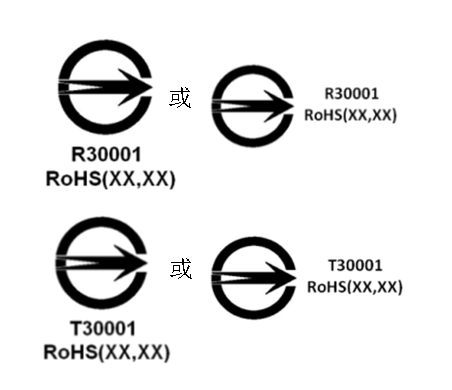
All three product categories must be affixed with two types of durable, clear markings in prominent positions on the product body, outer packaging, labels or user manuals.
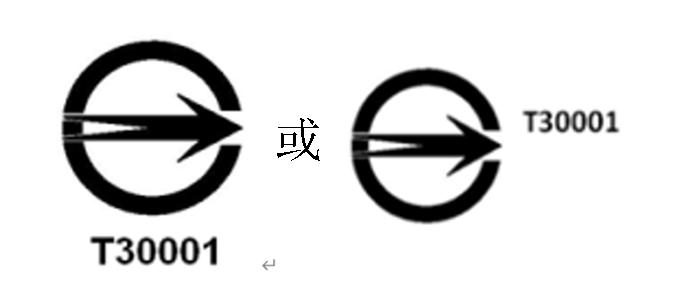
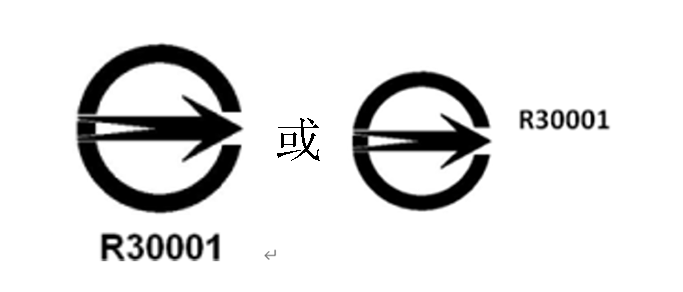
(1) Inspection Mark
Verification Registration products use codes starting with the letter R (e.g., R30001); Batch Inspection products use codes starting with the letter T (e.g., T30001). Enterprises print the marks by themselves, with the code placed right next to the mark graphic.
(2) RoHS Restricted Substance Mark
Six hazardous substances are regulated: lead, cadmium, mercury, hexavalent chromium, polybrominated biphenyls (PBBs) and polybrominated diphenyl ethers (PBDEs).
Mark "RoHS" if all substances meet the limits; if one or multiple substances exceed the standard, mark the corresponding substances clearly, e.g., RoHS(Pb). If enterprises choose to disclose substance content on a webpage, the website URL must be printed on the product or packaging.
V. Implementation Suggestions for Enterprises
1、From now until June 2027: Sort out all product lines and existing certificates. Complete newly added tests such as the penetration test for power banks below 160 Wh in advance, and design new version markings simultaneously.
2、June 2027 (Critical Window Period): Complete certificate renewal for power banks and marking rectification for all product lines in batches; submit new certificate applications or extensions as needed to avoid overdue expiration.
3、Starting July 1, 2027: Fully implement the new standards for all new product certification and batch shipments, and establish a regular internal compliance self-inspection mechanism.
These updated BSMI regulations have raised the overall safety threshold for lithium power supplies and serve as a mandatory market access requirement for entering the Taiwan market. All manufacturers and foreign trade enterprises shall implement the above requirements item by item and complete rectification in advance to avoid cargo detention, administrative penalties and brand losses caused by non-compliance issues.